
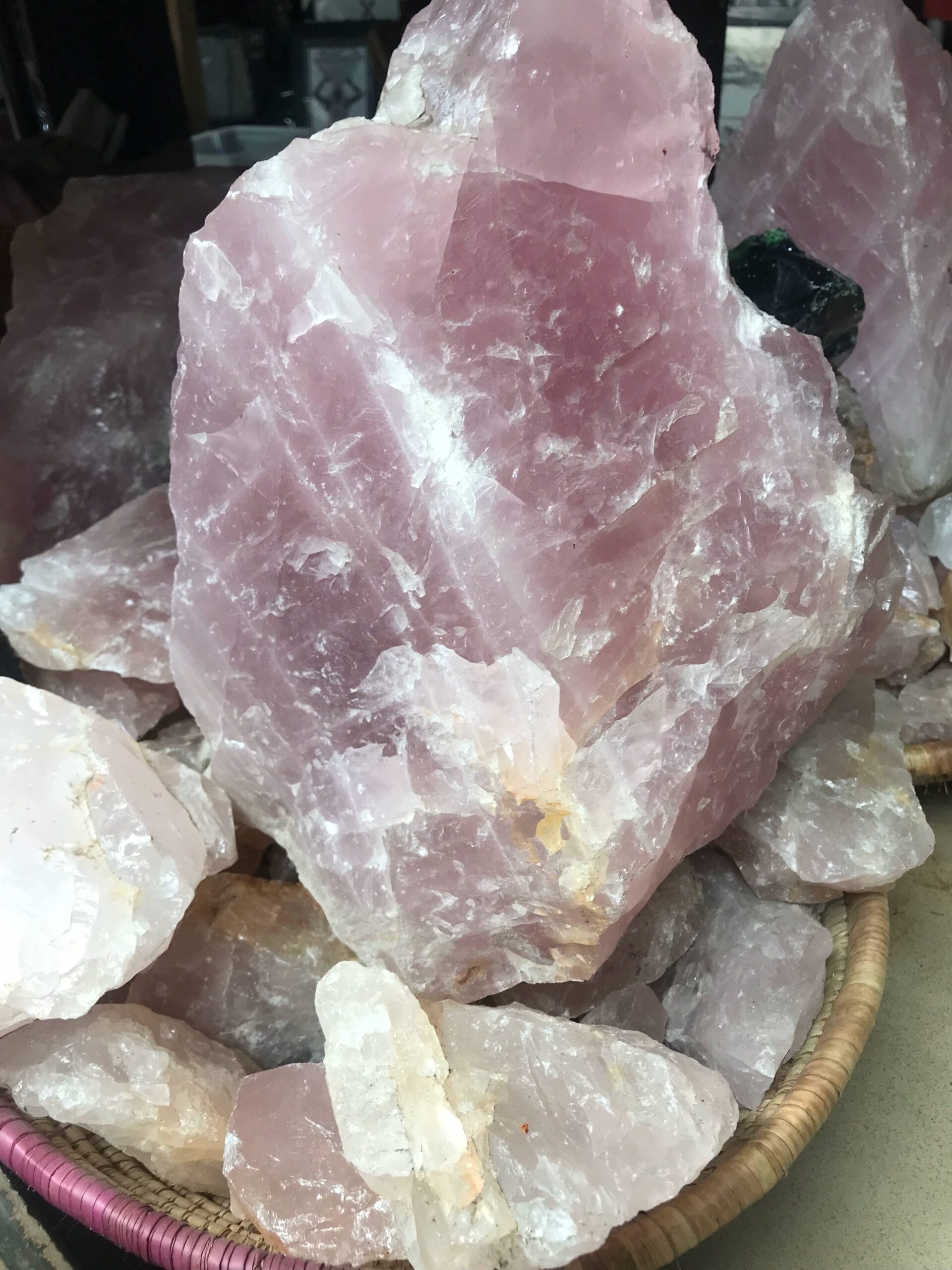
Gemstones and Crystals in Nigeria: A Journey Beneath the Surface
When people think about Nigeria’s natural wealth, crude oil is usually one of the first things that comes to mind.
But beneath Nigeria’s soil lies another extraordinary resource story one written in quartz, tourmaline, aquamarine, sapphire, amethyst, garnet, topaz, beryl, zircon, tantalite and many other minerals and gemstones.
Nigeria’s geological landscape is remarkably diverse.
From the ancient crystalline rocks of the basement complex to younger granite formations, schist belts and pegmatite systems, different parts of the country provide geological environments in which a wide range of minerals can occur.
The Nigeria Geological Survey Agency (NGSA) currently maps and documents mineral occurrences across the country, with its national mineral resources map identifying gemstones and minerals including aquamarine, beryl, emerald, sapphire, ruby, garnet, topaz, tourmaline, amethyst, rose quartz and others.
This makes Nigeria far more interesting to the world of crystals and gemstones than many people realize.
But where exactly are these stones found?
Which Nigerian states are known for gemstones?
What is the history of gemstone mining in Nigeria?
And why do certain regions produce particular types of crystals?
Let’s dig beneath the surface.
What Are Gemstones and Crystals?
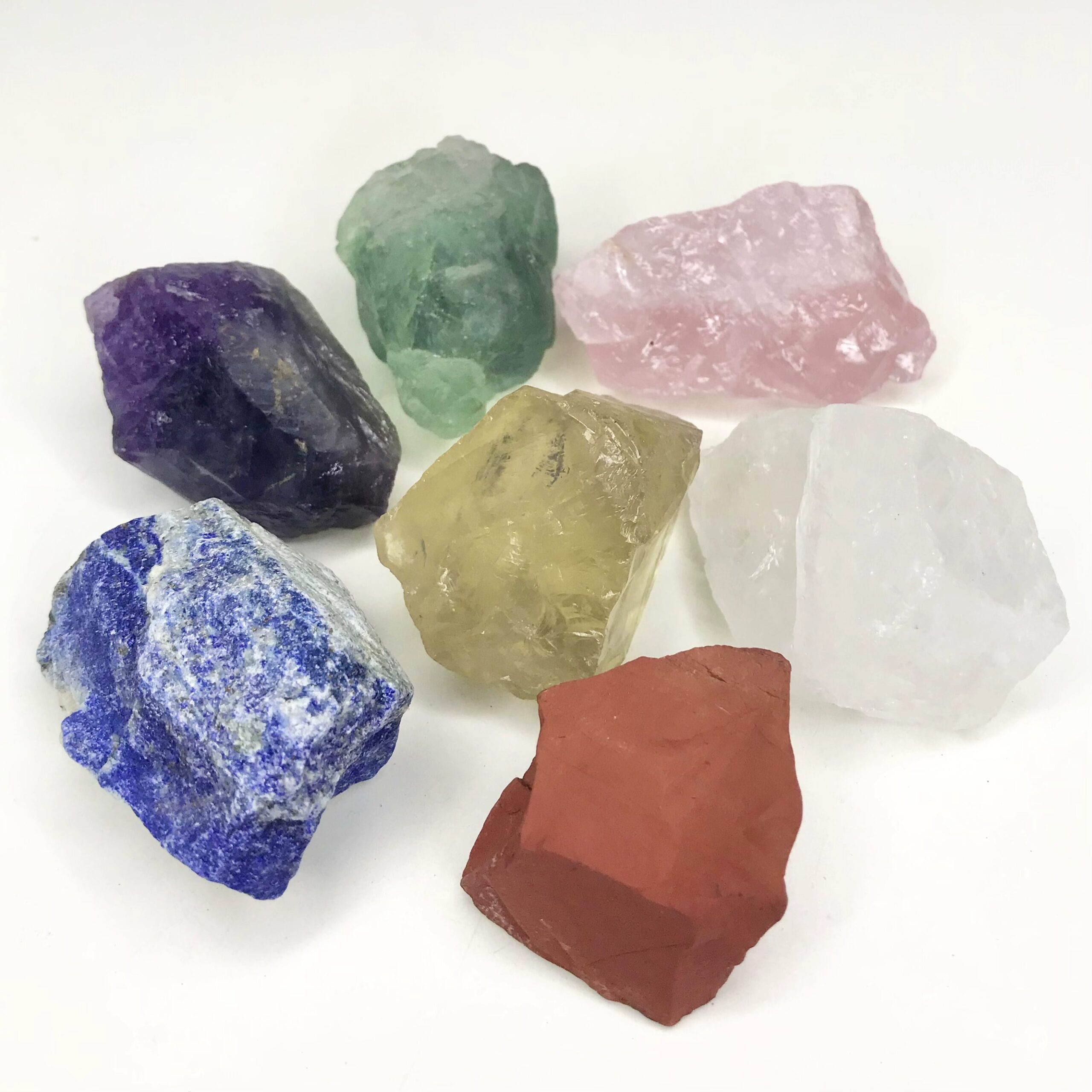
Gemstones from RA TRIBE Collection
Before exploring Nigeria’s gemstone regions, it helps to understand the difference between a mineral, crystal and gemstone.
A mineral is a naturally occurring inorganic substance with a characteristic chemical composition and internal structure.
A crystal is a solid material whose atoms are arranged in an ordered, repeating structure.
A gemstone is generally a mineral or other natural material that is valued because of qualities such as:
• beauty
• colour
• rarity
• durability
• transparency
• optical properties
• cultural significance
• collectability
Not every crystal is a gemstone.
And not every gemstone is necessarily a crystal in the way people commonly imagine.
For example, quartz can occur as beautiful crystal specimens and can also be fashioned into gemstones.
Tourmaline can form elongated crystals and is also prized as a gemstone.
Sapphire and ruby are varieties of the mineral corundum.
Emerald is a variety of beryl.
Aquamarine is another variety of beryl, usually recognized for its blue to blue-green colour.
This distinction becomes particularly important when shopping for Nigerian stones because the word crystal is often used broadly in the contemporary metaphysical market.
Why Does Nigeria Have So Many Minerals and Gemstones?
Nigeria’s geological history is the foundation of its mineral wealth.
The country contains extensive areas of ancient crystalline basement rocks, younger granite complexes, schist belts, sedimentary basins and pegmatites.
These geological environments create different conditions for mineral formation.
One particularly important geological environment is the pegmatite.
Pegmatites are coarse-grained igneous rocks that can become enriched in unusual elements and minerals. Some Nigerian pegmatite belts contain economically interesting rare metals and gemstones.
The NGSA’s National Integrated Mineral Exploration Project has identified pegmatite targets across parts of Kwara, Ekiti, Ogun, Nasarawa and Plateau, with reported evidence including gem-quality tourmaline, green beryl and spessartine garnet alongside lithium-bearing mineral such as lepidolite and spodumene.
This is one reason central Nigeria and parts of southwestern Nigeria are particularly important when discussing Nigerian gemstones.
A Brief History of Mining in Nigeria
Mining in Nigeria did not begin with the modern oil industry.
Mineral extraction and the use of naturally occurring materials have much older histories.
However, the modern history of systematic geological exploration and commercial mining developed significantly during the colonial period.
One of the most important chapters was the development of the tin fields around the Jos Plateau.
The NGSA’s historical publications include early geological surveys such as The Geology of the Plateau Tinfields, The Northern Tinfields of the Bauchi Province, The Tinfields of Nassarawa and Ilorin Province and The Southern Plateau Tinfields. (Nigeria Geological Survey Agency)Tin mining became particularly important around the Jos Plateau because of the presence of cassiterite and related mineralization.
The geological environment of the Nigerian Younger Granites is associated with cassiterite, wolframite, scheelite and other mineralization, with both alluvial/eluvial deposits and pegmatite-hosted mineralization documented by the NGSA.
This history is important to the story of Nigerian crystals because the same geological environments associated with rare-metal mineralization can also host gemstones and attractive mineral specimens.
The Jos Plateau and Nigeria’s Mining History
The Jos Plateau in Plateau State occupies an important place in Nigeria’s mining history.
The area became internationally known for tin mining, particularly because of its cassiterite deposits.
The geological setting includes the famous Younger Granite complexes and associated pegmatites.
The NGSA describes the Younger Granites as sources of rich alluvial cassiterite deposits around the Jos Plateau ring complexes.
For anyone interested in Nigerian gemstones, the Plateau region is therefore important not simply because of individual crystals but because it illustrates the relationship between:
geology → mineralization → mining → local communities → Nigeria’s mineral economy.
Plateau State remains one of the important regions to understand when exploring Nigeria’s mineral and gemstone landscape.
Major Gemstone Mining States in Nigeria
Nigeria’s gemstones are not concentrated in one single state.
Mineral occurrences have been documented across numerous parts of the country.
Some states are particularly notable for gemstone and pegmatite-related mineralization, while others are better known for specific minerals.
Below is a practical overview.
1. Nasarawa State
Nasarawa is one of the most important states to know when researching gemstones in Nigeria.
The state’s geology includes basement-complex rocks, granites, schists and other geological formations associated with a wide variety of mineral occurrences.
The official NGSA mineral resources map for Nasarawa identifies gemstones and minerals including:
• aquamarine
• beryl
• topaz
• ruby
• tantalite
• columbite
• mica
• zircon
• wolframite
• lead-zinc
• iron ore
• graphite
• garnet
• and other commodities.
Nasarawa is therefore one of the states that should immediately come to mind when someone asks:
“Where can gemstones be found in Nigeria?”
The state’s proximity to Abuja has also made it an important part of Nigeria’s contemporary mineral exploration and trading landscape.
2. Plateau State
Plateau State has a long mining history, particularly associated with tin and the Jos Plateau.
But the state’s geological significance extends beyond cassiterite.
Pegmatite systems and crystalline rocks provides environment for a variety of minerals.
The NGSA’s current exploration work includes Wamba in Plateau State as one of its priority areas for rare-metal exploration. The project reported evidence of gem-quality tourmaline, green beryl and spessartine garnet in pegmatite bodies.
For crystal collectors, this is particularly interesting.
Tourmaline from Nigerian pegmatites can occur in striking colours and crystal forms, making Nigerian material attractive to both mineral collectors and the gemstone trade.
3. Oyo State
Southwestern Nigeria is also part of the country’s gemstone story.
The official NGSA mineral resources map for Oyo State records occurrences including:
• amethyst
• aquamarine
• beryl
• garnet
• sapphire
• tourmaline
• blue tourmaline
• topaz
• quartz
• tantalite
• and other minerals.
This makes Oyo particularly relevant for searches such as:
“Where is amethyst found in Nigeria?”
and
“Where is aquamarine found in Nigeria?”
The geological diversity of the state contributes to its range of mineral occurrences.
4. Ogun State
Ogun State is another southwestern state with documented pegmatite-related mineral potential.
The NGSA’s national exploration work includes Apomu in Ogun State among priority targets for rare-metal exploration.
The broader southwestern pegmatite belt is important because pegmatites can host minerals containing lithium, tantalum, niobium and other rare elements, as well as gemstones.
This means Ogun should not be overlooked when discussing the mineral wealth of southwestern Nigeria.
5. Osun State
Osun State has also been identified by the NGSA for assessment of pegmatite resources.
This is particularly relevant because pegmatites can host a combination of economically important minerals and gem materials.
The agency lists Osun among states where pegmatite resources have been assessed.
Osun is also part of the broader geological landscape of southwestern Nigeria that includes ancient basement rocks and mineralized zones.
6. Ekiti State
Ekiti is another state worth watching in Nigeria’s developing gemstone and rare-mineral industry.
The NGSA’s exploration programme includes Ijero/Aramoko in Ekiti State among its priority pegmatite targets.
The region’s pegmatite systems have attracted interest for rare metals and associated minerals.
For crystal enthusiasts, this is particularly significant because pegmatite environments can produce exceptionally large and visually striking crystals.
7. Kwara State
Kwara is also included in the NGSA’s exploration work on Nigerian pegmatites.
The Lafiagi area of Kwara State was identified as one of the priority exploration blocks under the National Integrated Mineral Exploration Project.
Kwara’s position within Nigeria’s broader crystalline and pegmatite geological landscape makes it relevant to mineral collectors and researchers interested in Nigerian stones.
8. The Federal Capital Territory
Even the Federal Capital Territory has a documented mineral story.
The official NGSA mineral map for the FCT records occurrences including:
• amethyst
• aquamarine
• tourmaline
• quartz
• beryl
• tantalite
• cassiterite
• gold
• zircon
• marble
• feldspar
• lead-zinc
• and other minerals.
This is particularly interesting because Abuja is often perceived primarily as Nigeria’s political capital.
Geologically, however, the FCT sits within a mineral-rich part of the country.
Nigerian Gemstone Map: Where Are Gemstones Found?
Nigeria’s official mineral-resource mapping shows gemstone and mineral occurrences distributed across multiple geological zones.
The national NGSA mineral resources map includes occurrences of:
• amethyst
• aquamarine
• beryl
• emerald
• sapphire
• ruby
• garnet
• topaz
• tourmaline
• rose quartz
• zircon
• corundum
• fluorite
• and many other minerals.
This is why it is difficult to answer the question “Which state has gemstones in Nigeria?” with one state.
There isn’t one.
Nigeria has a geographically diverse gemstone landscape.
The Nigerian States Known for Gemstones at a Glance
State/Region Examples of documented gemstone/mineral occurrences
Nasarawa – Aquamarine, beryl, topaz, ruby, garnet, zircon, tantalite
Plateau – Tourmaline, beryl, garnet and extensive historic tin mineralization
Oyo – Amethyst, aquamarine, beryl, sapphire, garnet, tourmaline, topaz
FCT Abuja – Amethyst, aquamarine, tourmaline, quartz, beryl, zircon
Ekiti – Pegmatite-related minerals and rare-metal potential
Kwara – Pegmatite-related mineralization and rare-metal potential
Ogun – Pegmatite-related mineralization and rare-metal potential
Osun – Pegmatite-related mineralization
Zamfara – Pegmatite and other mineral exploration
Niger – Pegmatite and diverse mineral occurrences
This table should be viewed as a high-level guide rather than a complete list of every mineral occurrence. Mineral occurrence does not automatically mean there is a commercially viable mine, and not every occurrence produces gem-quality material.
Nigerian Tourmaline
Tourmaline is one of the most exciting gemstones associated with Nigerian pegmatites.
Tourmaline is actually a complex mineral group rather than a single mineral species, and it occurs in an extraordinary range of colours.
You may encounter Nigerian tourmaline in shades including:
• green
• blue
• pink
• red
• brown
• black
• multicoloured combinations
Some Nigerian pegmatite exploration has specifically reported gem-quality tourmaline.
This is one reason Nigerian tourmaline has become interesting to international collectors.
The combination of colour, crystal form and geological origin can make an individual specimen highly desirable.
Nigerian Aquamarine
Aquamarine is the blue to blue-green variety of beryl.
Its colour can range from pale watery blue to deeper blue-green shades.
Nigerian aquamarine occurrences have been documented in official geological mapping.
For example, both the Nasarawa and Oyo mineral maps identify aquamarine occurrences. (Nigeria Geological Survey Agency)
Aquamarine is particularly popular in jewellery because of its colour and relatively good durability.
For collectors, natural Nigerian aquamarine can also be interesting as a mineral specimen, particularly when the crystal form is preserved.
Nigerian Amethyst
Amethyst is the purple variety of quartz.
It is one of the most recognizable crystals in the world and one of the most popular stones in the modern crystal market.
Nigeria has documented amethyst occurrences.
The official mineral maps for both Oyo State and the FCT identify amethyst.
Nigerian amethyst can appear in different shades and crystal forms depending on the geological environment in which it formed.
For collectors, the origin of a specimen can be just as interesting as its colour.
Nigerian Sapphire
Sapphire is a variety of corundum.
Although sapphire is strongly associated with countries such as Sri Lanka, Madagascar and Australia in the international gemstone industry, Nigeria also has documented sapphire occurrences.
The NGSA mineral resources map records corundum, sapphire and ruby among Nigeria’s mineral occurrences.
Oyo State’s mineral map also identifies sapphire occurrences.
As with all gemstones, an occurrence does not automatically mean every stone found in that area is gem-quality.
Gemstone quality depends on factors including:
• colour
• clarity
• transparency
• crystal structure
• inclusions
• size
• durability
• cutting potential
Nigerian Beryl and Aquamarine
Beryl is a fascinating mineral because several famous gemstones belong to the beryl family.
These include:
• emerald
• aquamarine
• heliodor
• morganite
• goshenite
Nigeria has documented beryl and aquamarine occurrences.
The Nasarawa mineral map, for example, identifies both beryl and aquamarine.
The relationship between beryl and pegmatites is also important in understanding Nigeria’s gemstone geology.
Nigerian Garnet
Garnet isn’t one single mineral either.
It is a group of related minerals that can occur in different colours and compositions.
Nigeria’s official geological mapping identifies garnet occurrence in several locations.
Nasarawa and Oyo are among the areas documented for garnet.
Garnet is popular both as a gemstone and as a mineral specimen.
Its deep colours and natural crystal forms can make Nigerian garnet particularly attractive to collectors.
Nigerian Topaz
Topaz is another gemstone documented in Nigeria.
Nasarawa’s mineral map identifies topaz, while Oyo’s geological map also records topaz occurrences.
Natural topaz can occur in a variety of colours, including colourless, blue, yellow, pink and brown.
Because colour can also be produced or modified through treatment, buyers should always ask whether a gemstone is natural, treated or enhanced.
Nigerian Quartz and Rose Quartz
Quartz is among the most abundant and recognizable minerals on Earth.
It occurs in countless geological environments and forms many varieties and appearances.
In Nigeria, official mineral mapping identifies quartz and amethyst, while the national mineral resources map also identifies rose quartz.
Quartz is particularly important to crystal lovers because it occupies the fascinating space between:
geology + mineral collecting + gemstone culture + contemporary crystal practice.
A quartz crystal can be appreciated simply as a geological specimen, as a decorative object, as a jewellery material or as a symbolic object within a personal spiritual practice.
Nigerian Crystals and the Modern Crystal Movement
Nigeria’s mineral wealth has become increasingly interesting to the modern crystal community.
For years, much of the international conversation around crystals focused on famous mining locations in Brazil, Madagascar, Morocco, Afghanistan, Pakistan and other countries.
But Africa contains extraordinary mineral diversity.
Nigeria’s emergence within the contemporary crystal market creates an opportunity to tell a more local story.
Instead of asking only:
“What crystal is this?”
we can also ask:
“Where did it come from?”
“What geological environment formed it?”
“Who mined it?”
“How did it reach me?”
“Was it responsibly sourced?”
Those questions transform crystal collecting from simple consumption into a deeper appreciation of geology and provenance.
From Nigerian Soil to the Crystal Market
A gemstone’s journey can involve many stages.
1. Geological formation
Minerals form through geological processes occurring over enormous periods of time.
2. Mineral exploration
Geologists identify areas that may contain economically or scientifically significant mineralization.
3. Mining
Minerals may be extracted through different mining methods depending on their geological setting.
4. Sorting
Raw material is separated according to quality, size, colour, mineral type and potential use.
5. Cutting and polishing
Gem-quality material may be fashioned into jewellery stones.
6. Specimen preparation
Exceptional crystals may be cleaned and preserved in their natural form.
7. Trading
Rough and finished materials can move through local and international markets.
8. Collection
Eventually, a Nigerian stone may end up in the hands of a jewellery maker, mineral collector, crystal enthusiast or spiritual practitioner.
Understanding this journey makes provenance much more meaningful.
Are Nigerian Gemstones Ethically Sourced?
This is an important question for anyone buying Nigerian gemstones.
The existence of a gemstone deposit does not tell you how responsibly the material was extracted.
Mining can have environmental, economic and social consequences.
Responsible sourcing involves paying attention to:
• labour conditions
• land rights
• environmental impact
• mining regulations
• local community involvement
• traceability
• fair compensation
• safe working conditions
If you’re purchasing Nigerian gemstones, ask sellers what they know about the stone’s origin and supply chain.
“From Nigeria” is a geographical description.
Ethically sourced is a much stronger claim.
The two should not automatically be treated as synonyms.
Why Nigerian Gemstones Matter Beyond Their Beauty
Gemstones are often treated as luxury objects.
But Nigeria’s mineral resource represent something much longer.
They connect:
• geology
• science
• history
• economics
• local communities
• craftsmanship
• international trade
• jewellery
• culture
• collecting
Nigeria’s mineral sector is also the subject of continuing geological investigation.
The NGSA conducts geochemical mapping and mineral exploration projects across the country, while its Nigerian Mineral Resources Decision Support System provides access to geoscientific and geo-economic information about mineral occurrences.
This means our understanding of Nigeria’s mineral wealth continues to develop.
Why You Should Care About the Origin of Your Crystal
Two crystals can look almost identical while coming from completely different geological environments.
Their origins can affect:
• mineral associations
• colour
• inclusions
• crystal habit
• rarity
• collector value
• historical significance
This is why provenance has become increasingly important in mineral collecting.
Imagine holding a piece of Nigerian tourmaline and knowing that it formed inside a pegmatite system in the Nigerian geographical landscape.
It becomes more than a pretty stone.
It becomes a piece of Earth’s history from Nigeria.
Nigerian Gemstones and African Identity
There is also a cultural dimension to the growing interest in Nigerian gemstones.
For generations, Africa has often been represented primarily as a source of raw materials rather than as a place of scientific, geological and artistic knowledge.
Learning about Nigerian gemstones changes that narrative.
The continent isn’t simply a place where minerals are extracted.
It is a geological archive.
It is a source of exceptional natural materials.
And Nigeria is part of that story.
When we learn the names of Nigerian mining regions, understand the geology behind our crystals and recognize the work of local miners and artisans, we begin to see the country’s mineral resources differently.
Where Can You Buy Nigerian Gemstones and Crystals?
If you’re looking for Nigerian crystals or gemstones, start by asking the seller about provenance.
A reputable seller should be able to tell you as much as reasonably possible about:
Country: Nigeria
State/region: Where applicable
Mineral: What the stone actually is
Treatment: Natural, treated or enhanced
Form: Rough, polished, faceted or specimen
Source: Miner, dealer or documented supply chain
You can also ask whether the material is:
• natural
• synthetic
• dyed
• heat-treated
• irradiated
• coated
• stabilized
• reconstructed
Not every treatment is inherently bad.
The important thing is disclosure.
Nigerian Gemstones at RA TRIBE
At RA TRIBE, our interest in crystals goes beyond simply placing beautiful stones on a shelf.
We believe there is something powerful about knowing the story behind the materials we bring into our spaces.
Nigeria’s geological landscape is rich, diverse and still being explored.
From the pegmatites of central and southwestern Nigeria to the mineral-rich landscapes of Plateau and Nasarawa, the country has a remarkable story to tell through its stones.
For the modern Nigerian crystal lover, choosing a Nigerian gemstone can therefore become a way of appreciating:
the earth beneath us.
the geological history of our land.
the people who work with these materials.
and the beauty of natural minerals formed long before us.
Frequently Asked Questions About Gemstones and Crystals in Nigeria
Which state in Nigeria has the most gemstones?
There is no simple official ranking for which Nigerian state has “the most gemstones.” Several states have significant documented gemstone and mineral occurrences, including Nasarawa, Plateau, Oyo, the FCT, Ekiti, Kwara, Ogun and Osun.
Where are gemstones found in Nigeria?
Gemstone and mineral occurrences have been documented across numerous Nigerian states. Notable areas include parts of Nasarawa, Plateau, Oyo, the FCT, Ekiti, Kwara, Ogun and Osun, among others. The official NGSA mineral resources map records occurrences of sapphire, ruby, aquamarine, beryl, emerald, garnet, topaz, tourmaline, amethyst and other minerals.
Which Nigerian state is famous for gemstones?
Nasarawa and Plateau are particularly important in discussions of Nigeria’s mineral wealth, while Oyo is also notable for documented occurrences of amethyst, aquamarine, sapphire, tourmaline, topaz and other minerals.
Is there tourmaline in Nigeria?
Yes. Nigerian pegmatite exploration has documented gem-quality tourmaline, including in exploration areas associated with Plateau State.
Is aquamarine found in Nigeria?
Yes. Aquamarine occurrences are documented by the NGSA in states including Nasarawa and Oyo, among other locations.
Is amethyst found in Nigeria?
Yes. Amethyst occurrences are documented in Nigerian geological mapping, including Oyo State and the Federal Capital Territory.
Is sapphire found in Nigeria?
Yes. Sapphire and corundum occurrences are documented in Nigeria, including in the Oyo State mineral resources map.
Does Nigeria have emerald?
Nigeria’s national mineral resources mapping includes emerald among documented mineral occurrences. However, the presence of an emerald occurrence does not mean every stone from the location is gem-quality emerald.
What are the most valuable Nigerian gemstones?
Value depends on quality rather than simply country of origin. Colour, clarity, size, transparency, rarity, cut, treatment and provenance can all influence gemstone value.
What are Nigerian crystals used for?
Nigerian crystals may be used as mineral specimens, jewellery materials, decorative objects, collector pieces and, in contemporary spiritual communities, meditation or symbolic practices.
Is Nigerian tourmaline valuable?
Some Nigerian tourmaline can be valuable, particularly when it has exceptional colour, transparency, size, crystal form or collector appeal. However, not every tourmaline specimen is gem-quality or highly valuable.
Can I find crystals in Nigeria?
Yes. Nigeria has numerous documented mineral and crystal occurrences. However, finding a mineral occurrence is different from legally and commercially mining it. Anyone undertaking mining or mineral exploration should understand applicable Nigerian regulations and licensing requirements.
The Stones Beneath Us
Nigeria’s gemstone story is still being written.
From the historic tin fields of the Jos Plateau to the pegmatites of central and southwestern Nigeria, from aquamarine and beryl to amethyst, sapphire and tourmaline, the country’s geological diversity offers an extraordinarly window into the natural history beaneath our feet.
The next time you hold a Nigerian crystal, look beyond its colour.
Ask where it came from.
Ask what mineral it is.
Ask how it formed.
Ask who discovered it.
Ask how it travelled from the earth to your hands.
Because every natural stone carries a story.
And Nigerian gemstones have stories worth telling.
RA TRIBE — honoring the earth, exploring the unseen, and bringing the beauty of natural stones closer to home.